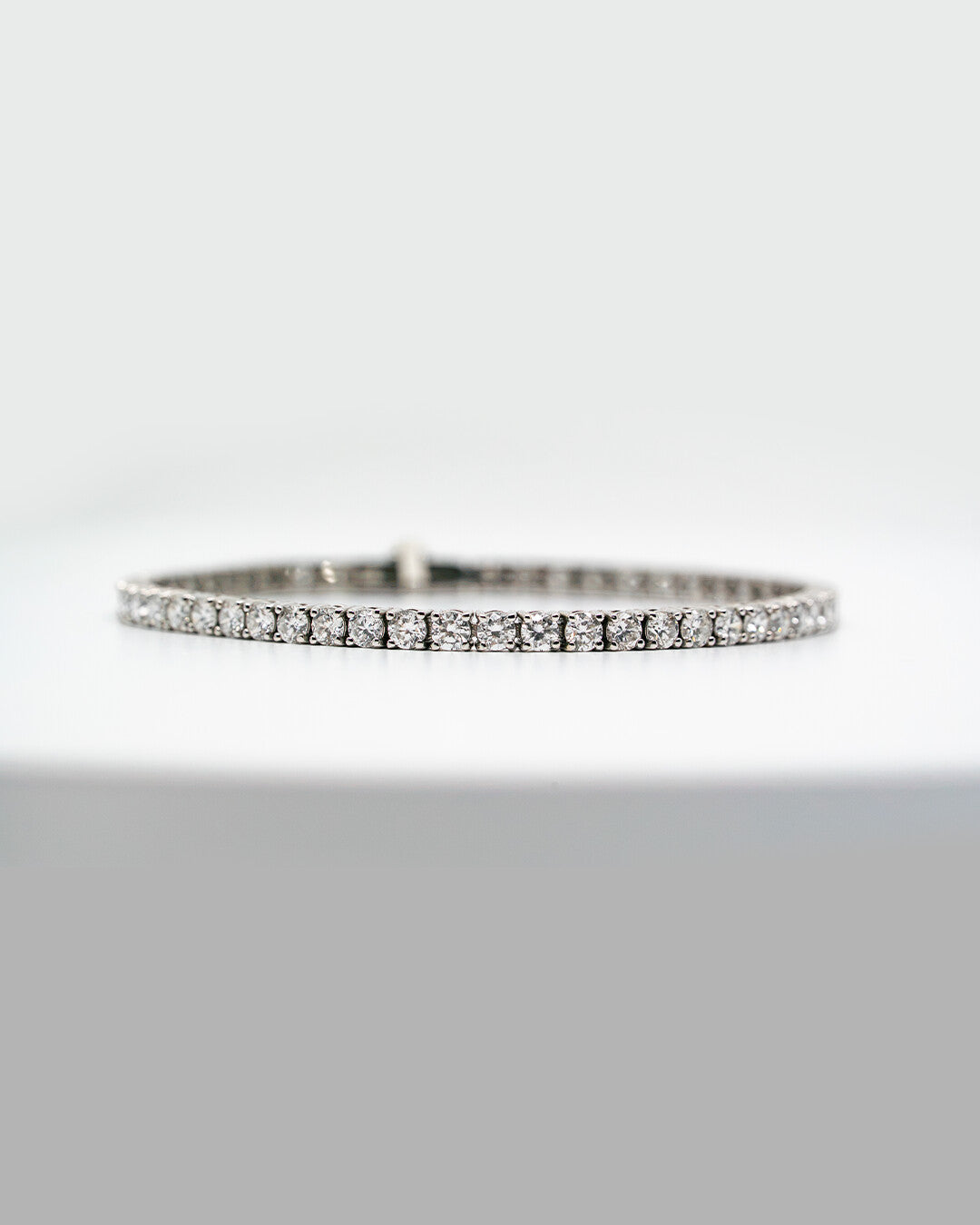
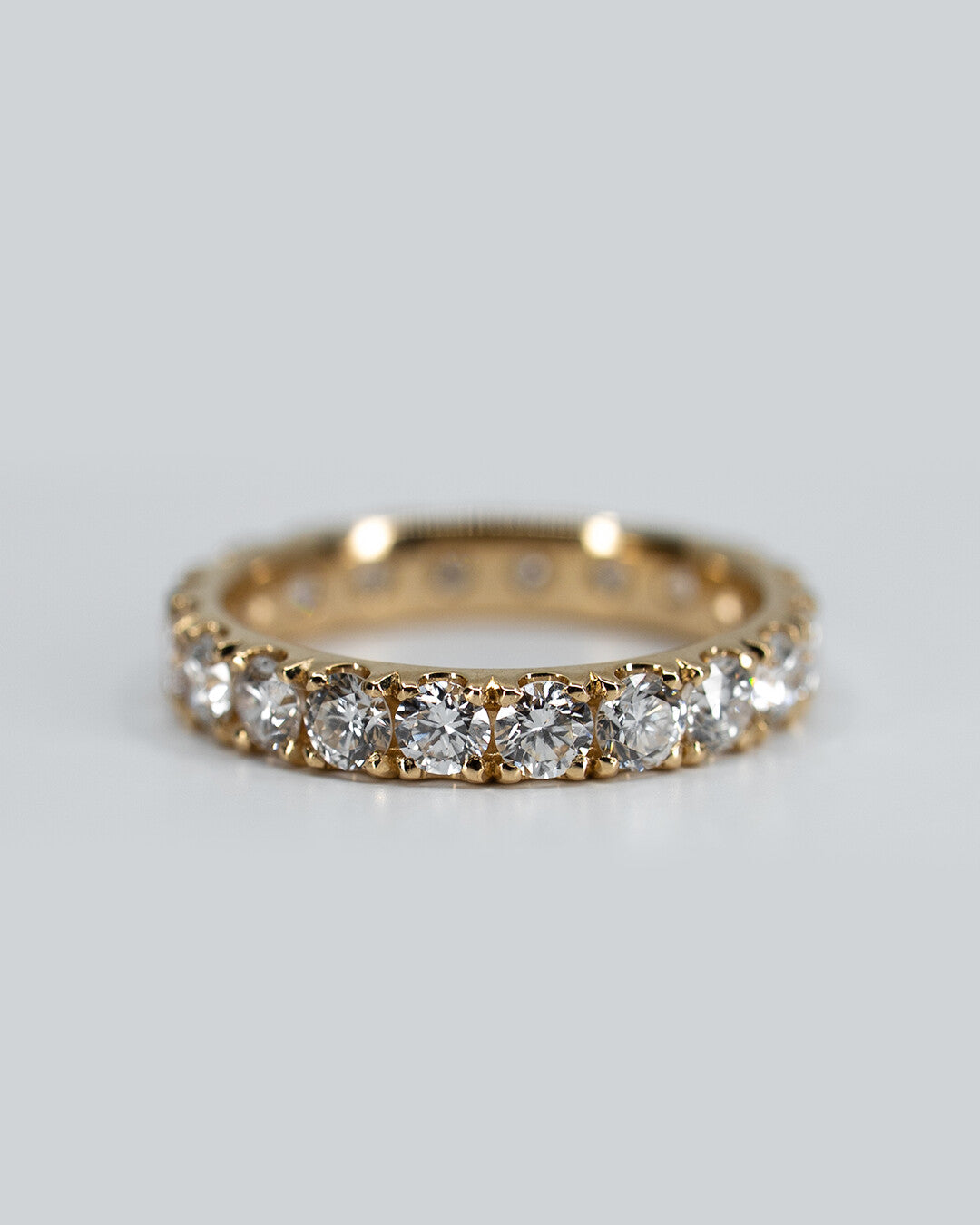


The metal is the foundation of every piece. This guide explains karats, gold colours, silver and plated finishes, so you can choose what suits your style, occasion and budget.
We offer solid gold in a variety of karats, alongside sterling silver, gold-plated and rhodium-plated pieces. Each has its own appeal, and every product page states the exact metal and finish.
Solid Gold Karats
Pure gold is too soft for most jewellery, so it is alloyed with other metals for strength. The karat tells you how much of the metal is pure gold, measured in parts out of 24. Many pieces are also stamped with a fineness number: the gold content in parts per thousand.
| Karat | Gold content | Fineness mark | In practice |
|---|---|---|---|
| 10K | 41.7% | 417 | Hard-wearing and the most affordable; a paler, softer colour |
| 14K | 58.3% | 585 | A balance of durability and rich colour; a favourite for everyday fine jewellery |
| 18K | 75% | 750 | Deeper colour and a softer metal, so more prone to scratches and dents with daily wear |
| 24K | 99.9% | 999 | Pure gold; generally too soft for fine jewellery that is worn often |
Karat measures gold content, not workmanship. A well-made 10K piece can outlast a poorly made 18K one.
Gold Colours
Yellow, white and rose gold of the same karat contain the same amount of pure gold. The colour comes from the other metals in the alloy.
- Yellow gold is alloyed with metals such as silver and copper, keeping gold’s natural warmth.
- White gold is alloyed with white metals such as palladium, nickel or zinc. On its own it has a soft, slightly warm grey tone, so white gold is usually rhodium plated for a bright white finish.
- Rose gold contains a higher proportion of copper, which gives it a pink tone.
Some white gold alloys contain nickel, which can irritate sensitive skin. If you have a known metal sensitivity, ask us before you buy.
Sterling Silver
Sterling silver is 92.5% pure silver, usually alloyed with copper for strength, and is often stamped 925. It has a bright, cool lustre at an accessible price.
Silver naturally tarnishes as it reacts with sulphur compounds in the air. A silver polishing cloth restores its shine, and airtight storage slows the process. Some sterling silver pieces are rhodium plated for extra tarnish resistance.
Gold-Plated and Rhodium-Plated Pieces
Plating bonds a thin layer of precious metal to the surface of another metal. It offers the look of gold, or a bright white finish, at a lower price than solid gold.
- Gold-plated pieces have a layer of gold over a base metal such as brass or sterling silver. You may also see the term vermeil, which generally refers to a thicker layer of gold over sterling silver.
- Rhodium-plated pieces carry a layer of rhodium, a bright, tarnish-resistant metal from the platinum family. It is used on white gold and on silver.
An honest note on plating
All plating wears over time. How quickly depends on its thickness and on friction: rings and bracelets, which brush against surfaces all day, show wear sooner than earrings or pendants. Perfume, lotion, chlorine and abrasive cloths speed it up. As plating wears, the metal underneath begins to show.
This is normal, not a defect, and many pieces can be re-plated. Refreshing the rhodium on white gold is part of our repair services.
Choosing for Daily Wear
- Rings and bracelets worn every day: solid gold in 10K or 14K offers the best durability. Expect white gold to need occasional re-plating.
- Earrings and pendants: these see less friction, so silver and plated pieces hold up well.
- Trying a new style: silver and plated pieces let you explore a look without the investment of solid gold.
- Pieces to keep for decades: solid gold, which can be polished, repaired and resized over time.
Whatever you choose, our care guide will help it last.