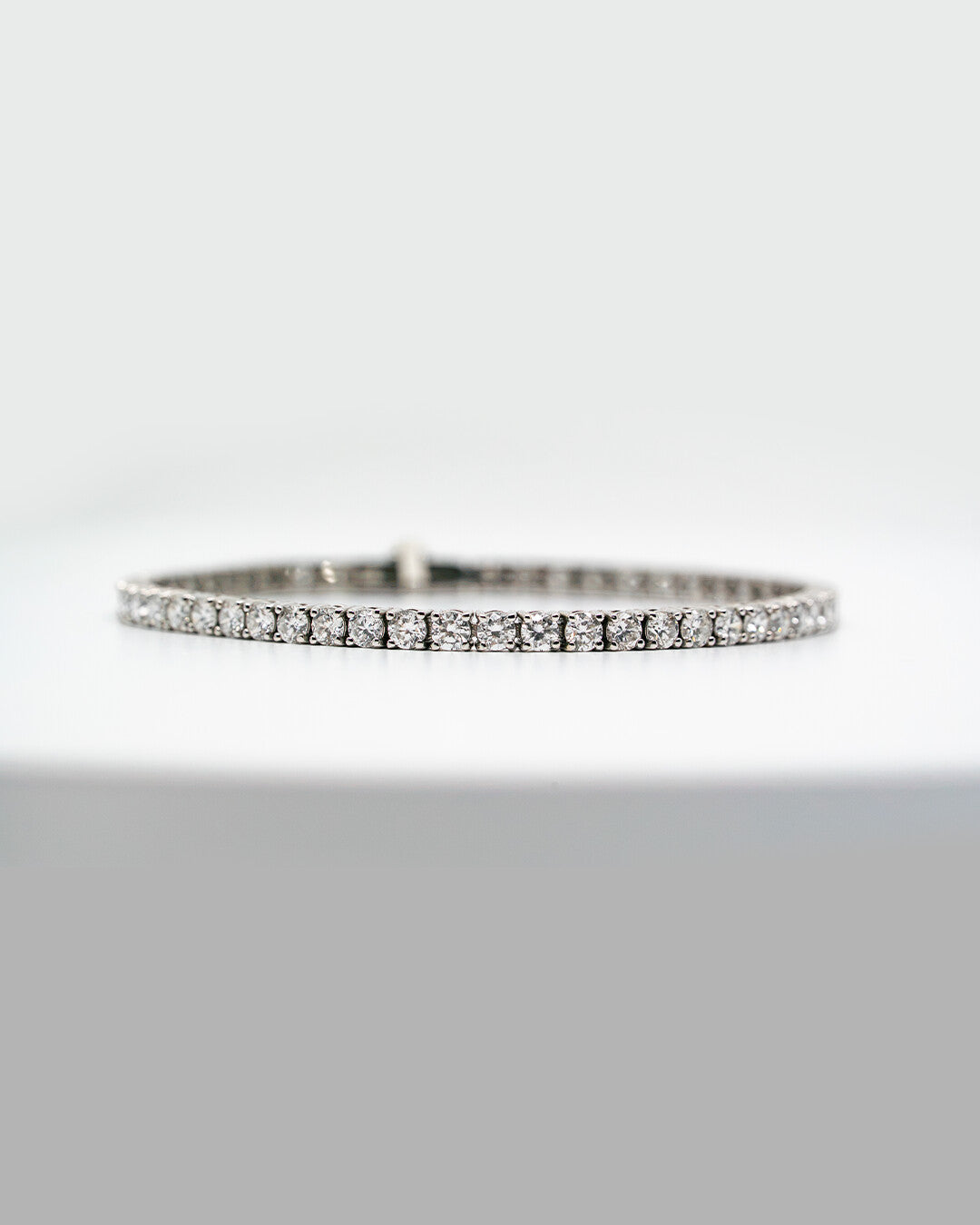
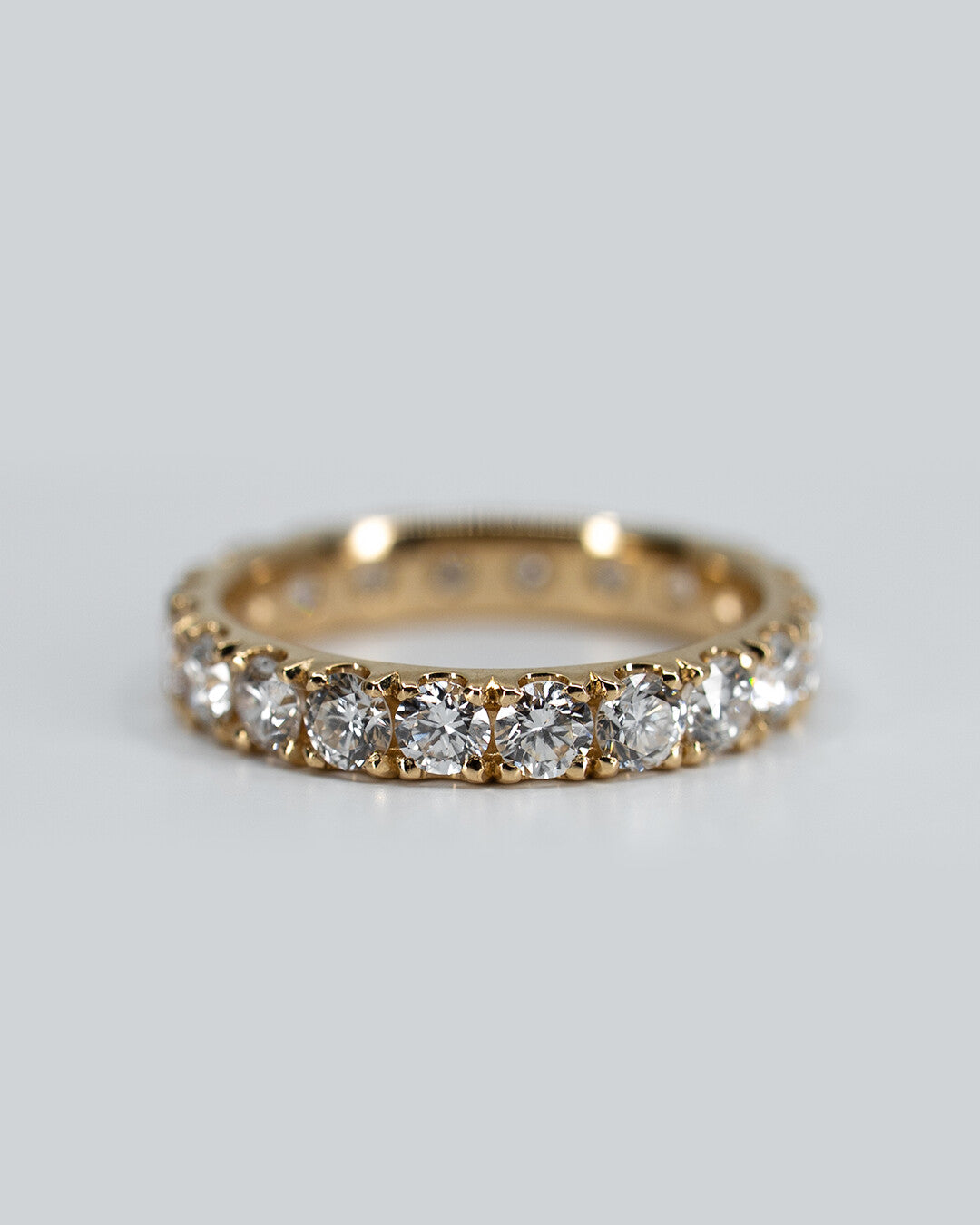


A diamond is easier to choose when you understand what you are looking at. This guide covers the essentials: natural versus lab-grown, the 4Cs, popular shapes and the documentation that comes with a diamond.
Natural vs. Lab-Grown
Natural and lab-grown diamonds are both real diamonds; the difference is where and how they formed. Natural diamonds crystallized deep within the earth over vast spans of geological time. Lab-grown diamonds are grown from carbon in a controlled environment, using high pressure and high temperature (HPHT) or chemical vapour deposition (CVD). The two cannot be told apart by eye; distinguishing them requires specialized laboratory equipment.
| Characteristic | Natural | Lab-Grown |
|---|---|---|
| Composition | Crystallized carbon | Crystallized carbon |
| Crystal structure | Cubic | Cubic |
| Hardness | 10 on the Mohs scale | 10 on the Mohs scale |
| Optical properties | Same refractive index and dispersion | Same refractive index and dispersion |
| Origin | Formed deep within the earth over geological time | Grown in a controlled environment, by HPHT or CVD |
| Grading and certification | Graded by independent laboratories such as GIA and IGI | Graded by independent laboratories such as IGI; the report identifies the diamond as laboratory-grown |
| Price | Higher, reflecting rarity | Typically considerably lower for a comparable size and quality |
Neither is the “better” diamond. Natural diamonds carry the appeal of rarity and geological age; lab-grown diamonds let your budget go further on size or quality. We label every piece clearly so you can decide what fits your values.
The 4Cs
Cut, colour, clarity and carat weight are the universal language of diamond quality, for natural and lab-grown diamonds alike.
Cut
Cut describes how well a diamond’s facets are proportioned, aligned and polished, not its shape. It has the greatest influence on sparkle: brightness, fire (flashes of colour) and scintillation. Round brilliants receive a cut grade, typically from Excellent down to Poor; for fancy shapes such as pear, reports usually grade polish and symmetry instead.
Colour
Colour is graded from D, completely colourless, to Z, with a noticeable light yellow or brown tint. Neighbouring grades are hard to tell apart outside controlled lighting.
- D–F: colourless
- G–J: near colourless
- K–M: faint colour
- N–R: very light colour
- S–Z: light colour
Clarity
Clarity grades the tiny internal features (inclusions) and surface marks (blemishes) visible under 10× magnification.
- FL: flawless
- IF: internally flawless
- VVS1–VVS2: very, very slightly included; extremely difficult to see under magnification
- VS1–VS2: very slightly included; minor inclusions under magnification
- SI1–SI2: slightly included; sometimes visible to the eye
- I1–I3: included; often visible to the eye
Carat
Carat measures weight, not size: one carat equals 0.2 grams. On pieces with more than one diamond you will see total carat weight (TCW or CTW), the combined weight of every diamond in the piece. A pair of 1.00 TCW studs, for example, holds two 0.50 carat diamonds.
Shapes
Round brilliant
The most popular shape, with 57 or 58 facets arranged to maximize brilliance. A timeless choice for studs, solitaires and tennis bracelets.
Pear
A teardrop combining a rounded end with a single point. Pear shapes look elongated and graceful, and can appear larger than a round diamond of the same weight. Look for a balanced outline and a minimal “bow-tie”, the darker area that can appear across the centre of elongated shapes.
Have another shape in mind, such as oval, cushion or emerald? Ask us about custom design.
Certification & Documentation
An IGI certificate is a grading report from the International Gemological Institute, an independent laboratory. It covers a single diamond, recording its origin and 4Cs grades with a unique report number you can verify online.
A Certificate of Appraisal describes the finished piece as a whole and states an appraised value. It is a useful record for insurance, but not a laboratory grading report. Pieces set with many small diamonds, such as tennis bracelets, are typically documented this way.
Each product page lists the documentation included. Learn more on our Authenticity & Certificates page.
How to Choose
- Set your budget first, then decide what matters most: size, whiteness or origin.
- Prioritize cut. A well-cut diamond will outshine a larger, poorly cut one.
- Consider the metal. White gold complements colourless grades, while yellow gold can make a hint of warmth in near-colourless diamonds less noticeable.
- Aim for eye-clean. You don’t need a flawless stone; VS clarity diamonds generally show no inclusions to the unaided eye.
- Look just under round numbers. Prices often step up at 0.50 and 1.00 carat, and a stone just below can look almost identical.
- Read the documentation. Compare specifications, not product names.
Prefer to talk it through? Book a diamond consultation, or browse our lab-grown diamonds.