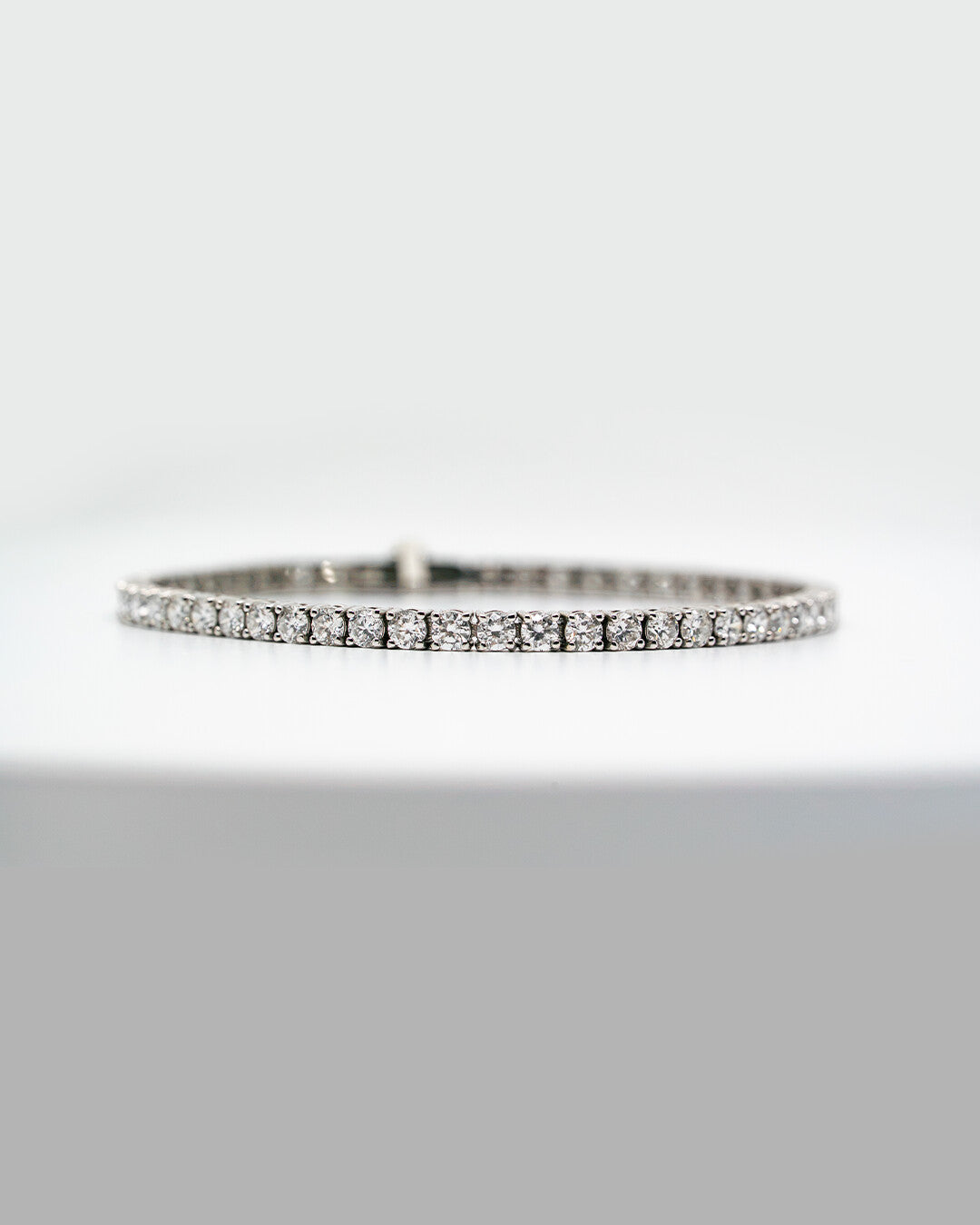
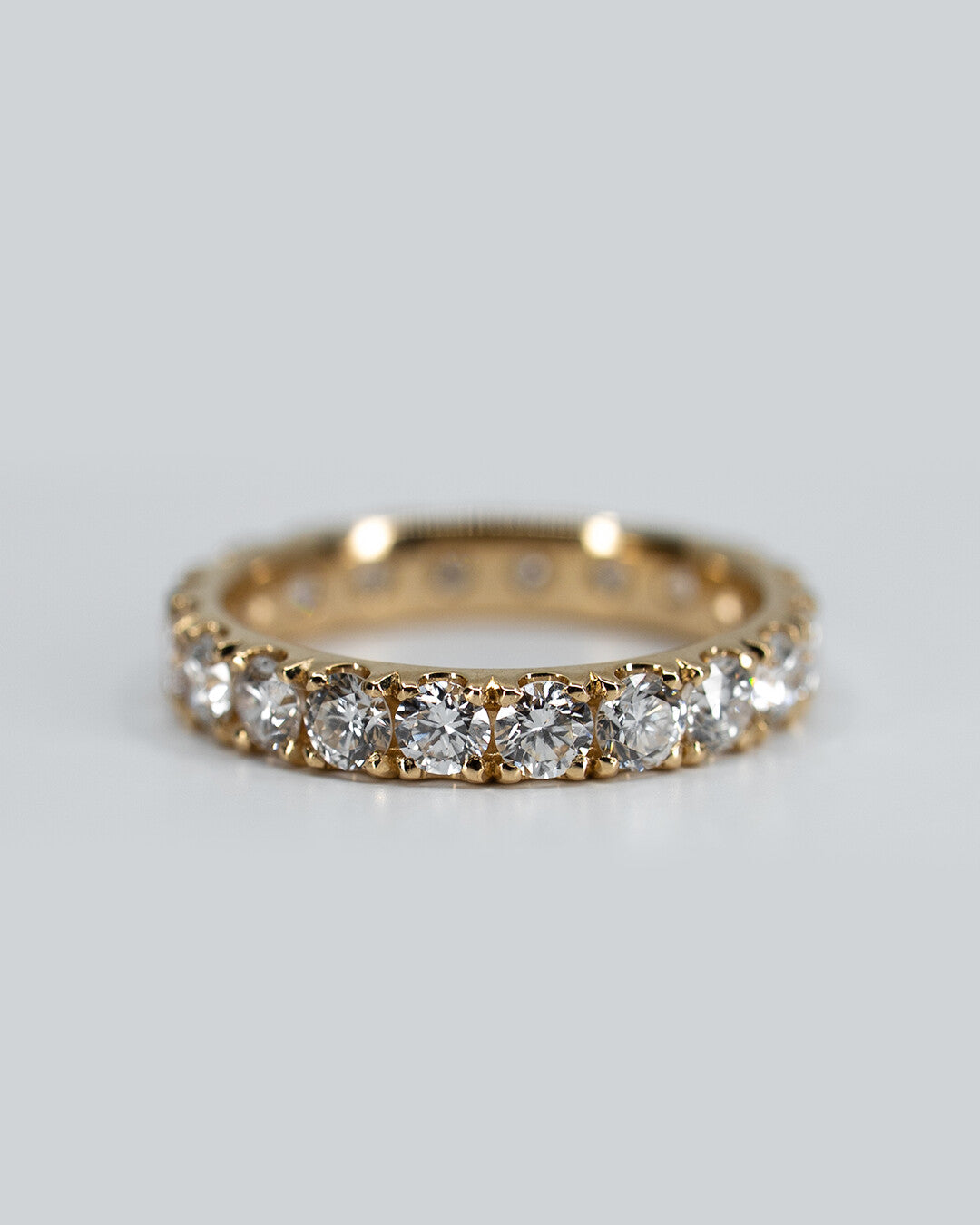


Fine jewellery is made to be worn, and a few simple habits will keep yours looking its best for years.
Daily Habits
- Last on, first off. Put jewellery on after perfume, lotion, hairspray and makeup, and take it off before bed.
- Remove it for hands-on tasks. Take pieces off for workouts, cleaning, gardening and heavy lifting.
- Keep it out of the water. Remove jewellery before swimming, bathing or using a hot tub.
- Hold rings by the band. Touching the diamond leaves skin oils that dull its sparkle.
Cleaning Diamonds at Home
Diamonds naturally attract oil and grease, which dulls their sparkle. A gentle clean at home brings it back.
- Fill a small bowl with warm, not hot, water and a few drops of mild dish soap.
- Soak the piece for several minutes to loosen any build-up.
- Brush gently with a soft toothbrush, paying attention to the area behind the stone where oil and lotion collect.
- Rinse in a bowl of clean warm water rather than under a tap over an open drain.
- Pat dry with a soft, lint-free cloth.
This method suits diamonds set in solid gold. For silver and plated pieces, follow the metal-specific care below.
Metal-Specific Care
Yellow and rose gold
Clean as above and buff with a soft jewellery cloth. Fine surface scratches are a normal part of wearing gold and can be polished out professionally.
White gold
Clean as above. Its rhodium plating will gradually wear, revealing a warmer tone beneath, most noticeably on rings. This is normal and can be restored by re-plating.
Sterling silver
Wipe with a silver polishing cloth to remove tarnish, and store pieces in an airtight pouch when you are not wearing them. Avoid silver dip cleaners on pieces with stones or plating.
Gold-plated and rhodium-plated pieces
Wipe gently with a soft, dry cloth after wearing. Avoid polishing cloths that contain cleaning compounds, which can remove plating, and keep these pieces away from water, perfume and lotion as much as possible.
Learn more about each metal in Understanding Karats & Finishes.
Storage
- Store each piece separately. Diamonds can scratch other jewellery, and even other diamonds.
- Fasten necklaces and bracelets before putting them away to prevent tangles and kinks.
- Keep pieces in their presentation box or a lined compartment, away from humidity.
- When travelling, use a padded jewellery case rather than a loose pocket or pouch.
What to Avoid
- Chlorine and bleach: found in pools, hot tubs and household cleaners, they can weaken gold alloys over time and damage plating.
- Harsh chemicals and abrasives: household cleaners, toothpaste and baking soda can scratch metal and strip finishes.
- Ultrasonic and steam cleaners: generally safe for diamonds in secure settings, but they can loosen stones in worn settings and damage plated pieces and some other gemstones. Ask us before using one at home.
- Hard knocks: diamond rates 10 on the Mohs hardness scale, but a sharp blow at the wrong angle can still chip it.
When to Bring It In
Have pieces you wear every day checked periodically (once a year is a good rhythm) and sooner if you notice any of the following:
- A stone that moves, rattles or sits differently
- A prong that catches on clothing or looks bent or worn
- A clasp that opens too easily, or a safety latch that doesn’t engage firmly
- Earring backs that slide off the post too easily
- White gold taking on a yellowish tone, or plating wearing through
- A ring band that looks thin or misshapen
If a stone feels loose, stop wearing the piece until it has been checked. Our repairs and sizing services cover cleaning, inspection and repair.